Included in packs
Muhurats sold only inside a pack or the Nitya Muhurat subscription.
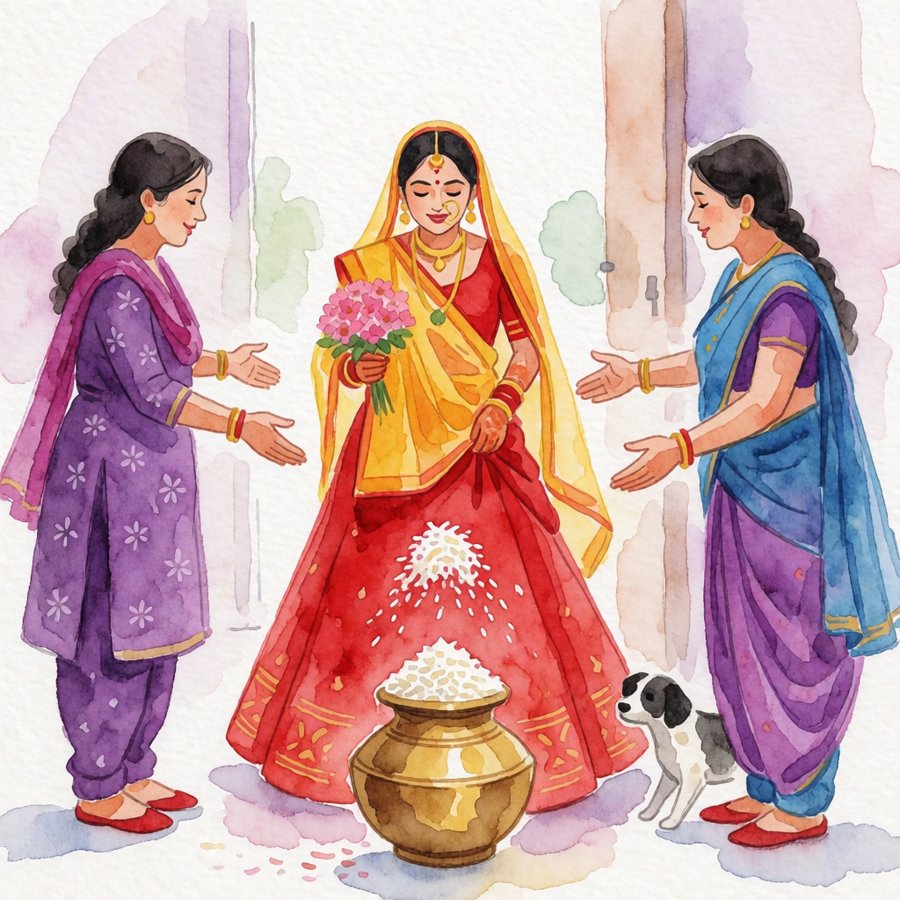
Bride's Griha Pravesh Muhurat
When the new bride steps in, the family welcomes Lakshmi into the house. The in-laws want her to feel at home from the first moment. She wants a good start in a new home. Everyone wants the family to be happy together. The classical texts on muhurta shastra give the bride's first entry its own muhurat, apart from the wedding. It is often a day or more later. We read those rules for the city of the house she is entering, on its own sunrise. What you get: Auspicious windows for the bride's first entry for the city of the house. The top 3 most auspicious ones highlighted. The days to avoid tagged along with the reasons. And, the classical text reference behind each recommendation. What we need: the bride's birth date, time and place, the city of the house she is entering, and your date range.
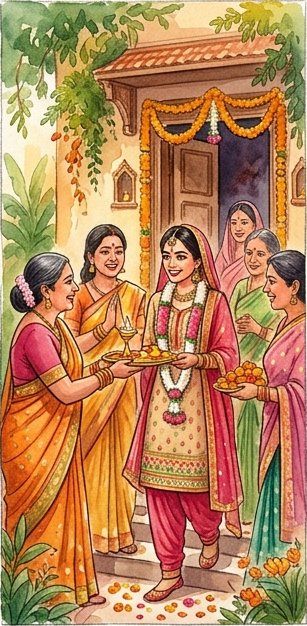
Pag Phera Muhurat
After the wedding, the bride spends a few days with her parents. Then she returns to her new home. You want to keep the family custom, and you want warm ties between both homes. Most of all, you want this second arrival to settle the new marriage. The classical texts on muhurta shastra treat her return as a fresh arrival, with its own muhurat. It is not a leftover of the wedding date. We read those rules for the city of the marital home, on its own sunrise. What you get: Auspicious windows for the bride's return for the city of the marital home. The top 3 most auspicious ones highlighted. The days to avoid tagged along with the reasons. And, the classical text reference behind each recommendation. What we need: the bride's birth date, time and place, the city of the marital home she returns to, and your date range.

Travel Muhurat
Some journeys matter more than others. A child leaving to study abroad. A family moving to a new country. You want a safe journey, a safe return, and the purpose of the trip to succeed. And parents want one less thing to worry about. The classical texts on muhurta shastra judge a departure by the day, the hour and the direction you head in. They read it against the traveller's own chart. We apply those rules for the city you leave from, on its own sunrise. What you get: Auspicious windows for the departure for the city you leave from. The top 3 most auspicious ones highlighted. The days to avoid tagged along with the reasons. And, the classical text reference behind each recommendation. What we need: the traveller's birth date, time and place (one person), the city you depart from, and your travel dates.
Wearing New Clothes
New clothes are a small happiness. They come with festivals, weddings and a child's first day of school. You want them to bring joy and good luck, and to last. And what you wear sits close to your body, so it matters. The classical texts on muhurta shastra give a short rule for wearing a garment the first time. Most households still keep it. We read that rule for your city, on its own sunrise, so the day you pick is the right one. What you get: Auspicious days to first wear new clothes, for your city. The top 3 most auspicious ones highlighted. The days to avoid tagged along with the reasons. And, the classical text reference behind each recommendation. What we need: your birth date, time and place, your city, and your date range.
Sowing a Crop
A whole year's work begins with the seed. You want a good crop and a good season. The sowing day is where that starts. The classical texts on muhurta shastra time seed going into the ground. They treat each crop in its own way, so paddy and wheat do not share the same days. We read those rules for your own field's location, not for a far-off city. What you get: Auspicious sowing days for your field, with the best hours in each. The top 3 most auspicious ones highlighted. The days to avoid tagged along with the reasons. And, the classical text reference behind each recommendation. What we need: the farmer's birth date, time and place, the village or field location, the crop, and the weeks sowing must happen in.
Harvesting a Crop
Harvest is the day months of work turn into grain you can count. You want a full harvest, brought home safely. And you want good value for it in the market. The classical texts on muhurta shastra time the start of cutting. They treat grain entering the house as its own event, with its own day. We read those rules for your field's location, and give you days across the whole harvest period. What you get: Auspicious cutting days for your field, with the best hours in each. Separate windows for the first threshing and for grain entering the house. The top 3 most auspicious ones highlighted. The days to avoid tagged along with the reasons. And, the classical text reference behind each recommendation. What we need: the farmer's birth date, time and place, the field location, the crop, and the weeks you expect to cut.