Dwiragamana muhurat: the pag phera return
Dwiragamana (Pag Phera Return)
Dwiragamana is the bride's second going, the return after pag phera when she travels from her parents' house back to her married home. Families ask for its shubh muhurat because it is reckoned on its own terms and not on whichever day happens to be convenient. Tarini gives you dated, timed windows for both halves of it, the setting out and the arrival, judged against the bride's birth chart and read with the groom's, ranked in order of strength with the days to avoid marked. Having the द्विरागमन मुहूर्त in hand means the elders on both sides can agree the day quietly in advance, and the journey is planned around the window instead of the other way round.
About this muhurat
The bride's return after pag phera, timed on its own reckoning rather than whichever day is convenient. You get the windows for both the journey back and the arrival.
After the wedding the bride customarily returns to her parents' home for a few days, a visit called pag phera, and Dwiragamana is her journey back to her husband's house at the end of it. In many families the couple travels together and is received again at the threshold with a small welcome. The stay may last three days, five days or longer depending on regional custom, so the return is rarely fixed by the calendar alone; the muhurat gives the family a considered day and hour within the period the elders have in mind.
What you receive
- Ranked, dated and timed pag phera return windows within the period you choose
- Judged against the relevant birth chart, not a generic panchang
- Days and windows to avoid, marked clearly
Dwiragamana muhurat: your questions
More wedding muhurats
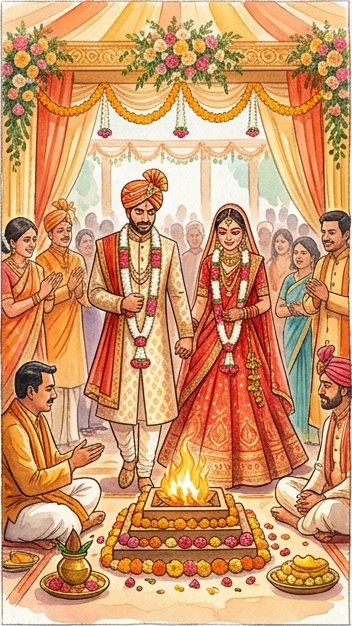
Vivaha (Wedding)
Fixing the wedding date is the one decision the whole family remembers. You get a ranked shortlist of dated, timed windows judged against both the bride's and the groom's charts, with the days to avoid marked clearly — so you can hold the venue and the priest without second-guessing, and answer confidently when relatives ask who worked it out.

Var Nishchaya (Engagement)
The sagai or roka, timed properly. You get dated windows that work for both families' charts and both families' calendars — usually inside the month you are already planning around, not months away.
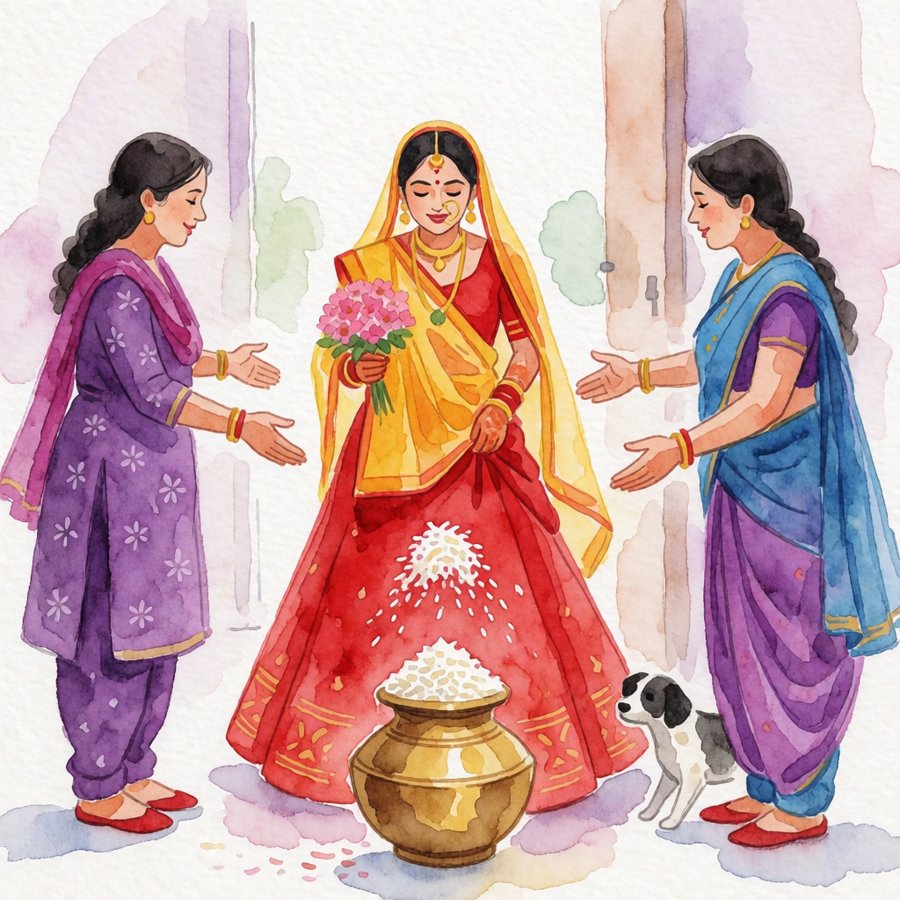
Vadhu Pravesha (Bride's First Entry)
The bride's first step into her new home has its own muhurat. It is not the wedding's and it is not a house warming's — you get the windows for the day she arrives, so the welcome is not rushed into whatever hour the cars happen to reach.